















A row of colorful T-shirts hangs across the Science and Technology Center lobby, each one sharing messages of pain, survival, and hope. All together, these shirts form the Clothesline Project, a powerful visual display that raises awareness about domestic and sexual violence while giving survivors and supporters a space to heal and be heard.
At Lasell, the project has become an annual tradition led Sherman first encountered the Clothesline Project as a Lasell student in 2018 and now helps organize it each year.
“Even if no one interacted with the display, I would still do it,” she said. “It’s a way to honor survivor stories.”
“This really started as a response to what was happening on our campus,” Sherman said. “It was student-driven then, and it’s still student-driven today. Even after all these years, we continue to receive more shirts each year.”
Though it’s become a regular part of Lasell’s fall semester, the Clothesline Project’s history dates to Cape Cod in 1990. According to the Men’s Rape Prevention Project in Washington, D.C., during the Vietnam War, 58,000 soldiers died; in the same period, 51,000 women were killed, most by men who claimed to love them.
That staggering statistic inspired a coalition of women on Cape Cod to act. Many were survivors themselves and wanted to find a creative, powerful way to turn statistics into stories. A visual artist named Rachel Carey-Harper suggested using T-shirts as a medium, which was a concept inspired by the AIDS Memorial Quilt and the idea of hanging laundry, traditionally “women’s work,” as a symbol of community storytelling.
The first Clothesline Project took place in October 1990 in Hyannis, Mass., featuring just 31 shirts during a “Take Back the Night” rally. After an article in Ms. Magazine, the movement spread nationwide. Today, there are more than 500 Clothesline Projects worldwide, displaying tens of thousands of shirts honoring victims and survivors of violence.
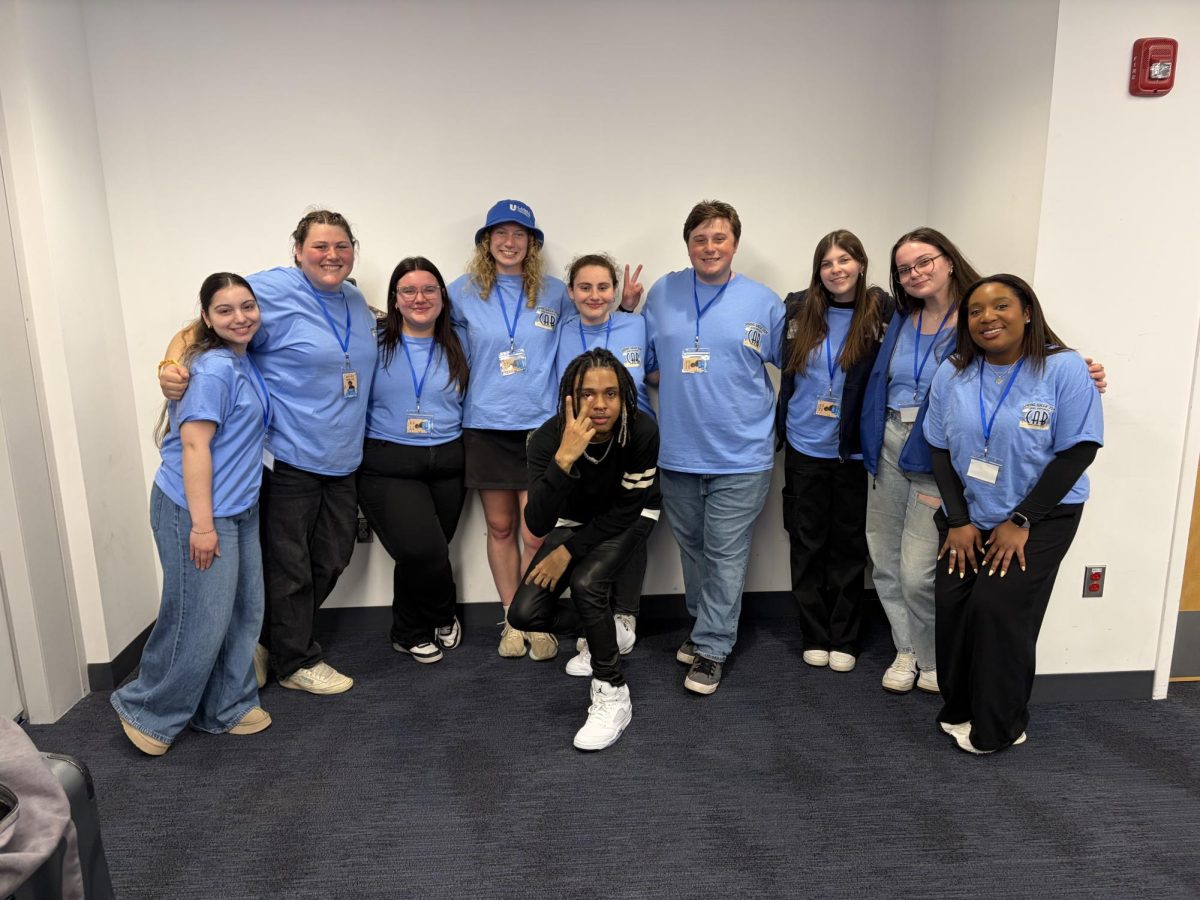
From Tuesday, Oct. 21, through Thursday, Oct. 23, LASER Peer Team members and Sherman set up the display from 10 a.m. to 4 p.m. each day and took it down nightly. The display invited students to learn, reflect, or write messages of support on paper t-shirts that would line the windows of the Donahue Gear shop.
“Seeing all the shirts and reading the stories is emotional and sometimes triggering, but it’s worth it,” said senior Reana Duran, a LASER Peer Team member. “It’s empowering to see how strong people can be. As a survivor myself, it is important to keep these conversations going and keep the awareness alive.”
For junior Bryanna Ducey, another member of the LASER Peer Team, the project is a reminder of how powerful shared stories can be. “The Clothesline Project helps foster a safe place for survivors to share their experiences and feel supported,” she said. “Even something as simple as writing a message of encouragement helps honor survivors and raises awareness.”
The fall display coincides with the “Red Zone”, the period between August and Thanksgiving break, when over half of campus sexual assaults occur nationwide.
“It’s important for students to recognize signs of unhealthy behaviors and know what resources exist,” said junior Caroline Morrell, another LASER Peer Team member.
For Sherman and her team, the project is about more than awareness; it’s about visibility and healing.
“Some of these shirts are over a decade old,” Sherman said. “But they still mean something to the people who made them. Every shirt tells a story, and every story deserves to be seen.”
–Nov. 4, 2025–