














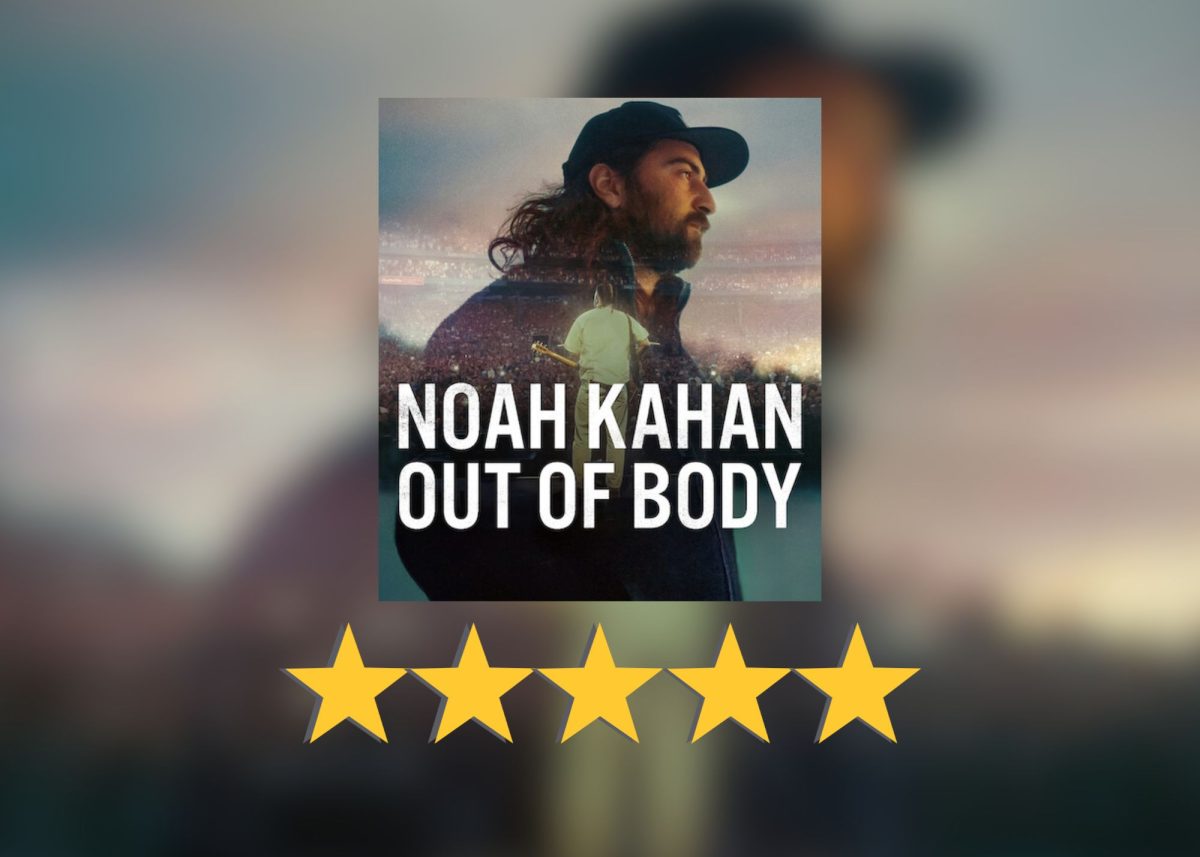











If you’ve seen one music documentary, you’ve basically seen them all. They’ve become the comfort food of the streaming world: A predictable three-act structure where we watch an artist struggle, blow up on TikTok or the charts, have one crying session on camera to prove they’re still real, and then end with a slow-motion shot of them walking onto a stage at Madison Square Garden. It’s a formula designed to make us feel like success is the ultimate disinfectant, that once you make it, the messy parts of being a human just sort of evaporate. But “Noah Kahan: Out of Body” is a rare exception to that rule, and it’s probably the most honest thing I’ve seen on a screen this year.
Coming off the massive, career-defining success of his album “Stick Season,” you’d expect this film to be a victory lap. On paper, Noah Kahan is having the kind of year every aspiring musician in a dorm room dreams about. He’s selling out massive venues, his lyrics are plastered across every Instagram caption, and he’s finally getting the mainstream validation he spent years grinding for. But the documentary makes a bold, almost uncomfortable choice: it refuses to pretend that any of that actually fixed him. Instead of using the footage of screaming fans as a sign that he’s arrived, the film uses it as a backdrop for a much more internal, claustrophobic story about someone who is gaining the world but losing his grip on himself.
What really sets “Out of Body” apart from the standard pop-star profile is Kahan’s transparency. He isn’t just sad in a way that looks good for the cameras; he’s open about the gritty, unglamorous realities of anxiety, body image, and disordered eating. Most documentaries would try to solve these issues by the 60-minute mark, framing them as past-tense hurdles that he’s cleared. This film doesn’t do that. It lets the struggles stay in the present tense. There is no polished redemption arc or “look how far I’ve come” montage. It’s ongoing and, at times, it’s genuinely difficult to watch. The film trusts the audience enough to leave those threads hanging, which is a level of respect for the viewer that you rarely see in this genre.
From a critic’s standpoint, the documentary isn’t exactly a perfect piece of cinema. The pacing can be a bit chaotic, and the structure tends to jump abruptly between the high-octane energy of a live show and the quiet, almost stagnant moments of Kahan just trying to exist in a hotel room.
But as a college student living in a culture that’s obsessed with the grind and curated perfection, that looseness actually makes it feel more authentic.
A more tightly edited version of this story would have felt like a PR stunt. The jaggedness of the film mirrors the fragmentation Kahan is feeling internally; it’s a rare instance where the technical flaws actually support the narrative.
What lingers longest after the credits roll is just how intentionally unglamorous the whole thing is.
It refuses to turn Kahan’s discomfort into inspiration or force some profound meaning onto moments that haven’t even finished happening yet.
It just shows a person in the middle of a whirlwind, still figuring it out, and still very much in the thick of his own head. For a generation that is constantly told that the next achievement or the next milestone will finally make us feel settled, “Out of Body” is a necessary reality check. It shows what happens when success and healing don’t line up the way the movies promised they would, and in doing so, it creates something much more meaningful than a standard music documentary: It creates a mirror for many and makes many think meaningfully about their own life and their own struggles.
–May 15, 2026–